 Cooler
Guides
Language
EnglishCurrency
US dollar · $On GetYourGuide you see prices in this currency.
Guide · Best time
The best time for whale watching in Juneau
When the humpbacks are in, which months are busiest for sightings, how wet and how bright each month is at Auke Bay, and what that means for the best time for whale watching in Juneau.
Check availabilityfrom $108 · free to cancel
Editorial team, juneauwhalewatchingtours.comUpdated October 16, 20266 minutes to read9 sources
When the whales are in Juneau
The short answer to the best time for whale watching in Juneau is the warm half of the year. Travel Juneau, the city's visitor bureau, puts the season from April through September, when the whales come north to feed in the rich Alaskan waters.1 Within that window, it names June to August as the peak, with the highest chances of sightings.2 If you can choose your dates freely, aim for the middle of summer.
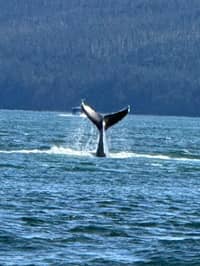
The reason is food. Humpback whales feed almost exclusively in the summer months and live off their fat reserves while they breed.5 Most of the humpbacks that feed in Alaska spend the winter in warmer waters near Mexico, Hawaii and Japan.6 Some of them make the trip from Alaska to Hawaii in as few as 28 days, a journey of about 3,000 miles.7
That does not mean the channels are empty outside summer. Humpbacks can be seen in Alaska at any time of year.6 In a research survey in November 2009, scientists counted an estimated 240 humpbacks in the area, 210 of them identified between Juneau and Seymour Canal.8 Tour schedules are another matter, so check that departures run on your dates.
The whale year
A season in Juneau's waters
-
April
Season opens
Travel Juneau's whale season starts.1
-
June
Peak begins
The highest chances of sightings run from June to August.2
-
Summer
Feeding time
Humpbacks feed almost exclusively in the summer months.5
-
September
Season ends
The last month on Travel Juneau's calendar, and the wettest at Auke Bay.13
-
Winter
Warm waters
Most humpbacks winter near Mexico, Hawaii and Japan.6
Spring: the first whales and quieter boats
April opens the season on Travel Juneau's calendar.1 The air is still cool, with an average high of 9.8 °C at Auke Bay and lows just above freezing.3 Days are already long, at 14.1 hours of daylight in mid-April, and the month is one of the drier ones on the station's record, with 78 mm of precipitation.3
May warms up noticeably, with an average high of 14.7 °C and 16.5 hours of daylight at mid-month.3 This is a good time for travelers who do not mind cooler weather on deck. The trade-off is that the season is still building, so sightings can be less predictable than in high summer.
If you are on an early-season cruise, dress for winter on the water even if the town feels mild. Wind across the channel makes it feel colder, and the enclosed cabins on many boats become very welcome between sightings. A hat and gloves take up no space and make a big difference. Spring is also a good time to pair the boat with a walk in town afterwards, since the evenings are long and the streets are calm once the ships leave, so you can end the day with a slow dinner rather than a rush back to the dock.
Climate
Daylight and rain at Auke Bay
Hours without sunDays with precipitationSeason
Month by month
Weather and whale season at Auke Bay
| Month | Sun (h) | No sun (h) | High / low | Wet days | Whale season |
|---|---|---|---|---|---|
| Jan | 6.8 | 17.2 | 0 / -4 °C | 13 | no |
| Feb | 9 | 15 | 2 / -3 °C | 10 | no |
| Mar | 11.4 | 12.6 | 4 / -2 °C | 10 | no |
| Apr | 14.1 | 9.9 | 10 / 1 °C | 9 | yes, from April |
| May | 16.5 | 7.5 | 15 / 6 °C | 10 | yes |
| Jun | 17.9 | 6.1 | 18 / 9 °C | 10 | yes, peak months |
| Jul | 17.3 | 6.7 | 18 / 11 °C | 13 | yes, peak months |
| Aug | 15.1 | 8.9 | 18 / 10 °C | 14 | yes, peak months |
| Sep | 12.5 | 11.5 | 14 / 8 °C | 17 | yes, until September |
| Oct | 9.9 | 14.1 | 9 / 4 °C | 18 | no |
| Nov | 7.4 | 16.6 | 3 / -1 °C | 15 | no |
| Dec | 6.1 | 17.9 | 1 / -3 °C | 14 | no |
The table lists daylight at mid-month, typical daytime highs and night lows, and the number of 2.5 mm days; NOAA, 1991 to 2020.3 Season according to Travel Juneau.1
Three seasons
Spring, peak or late season?
Cooler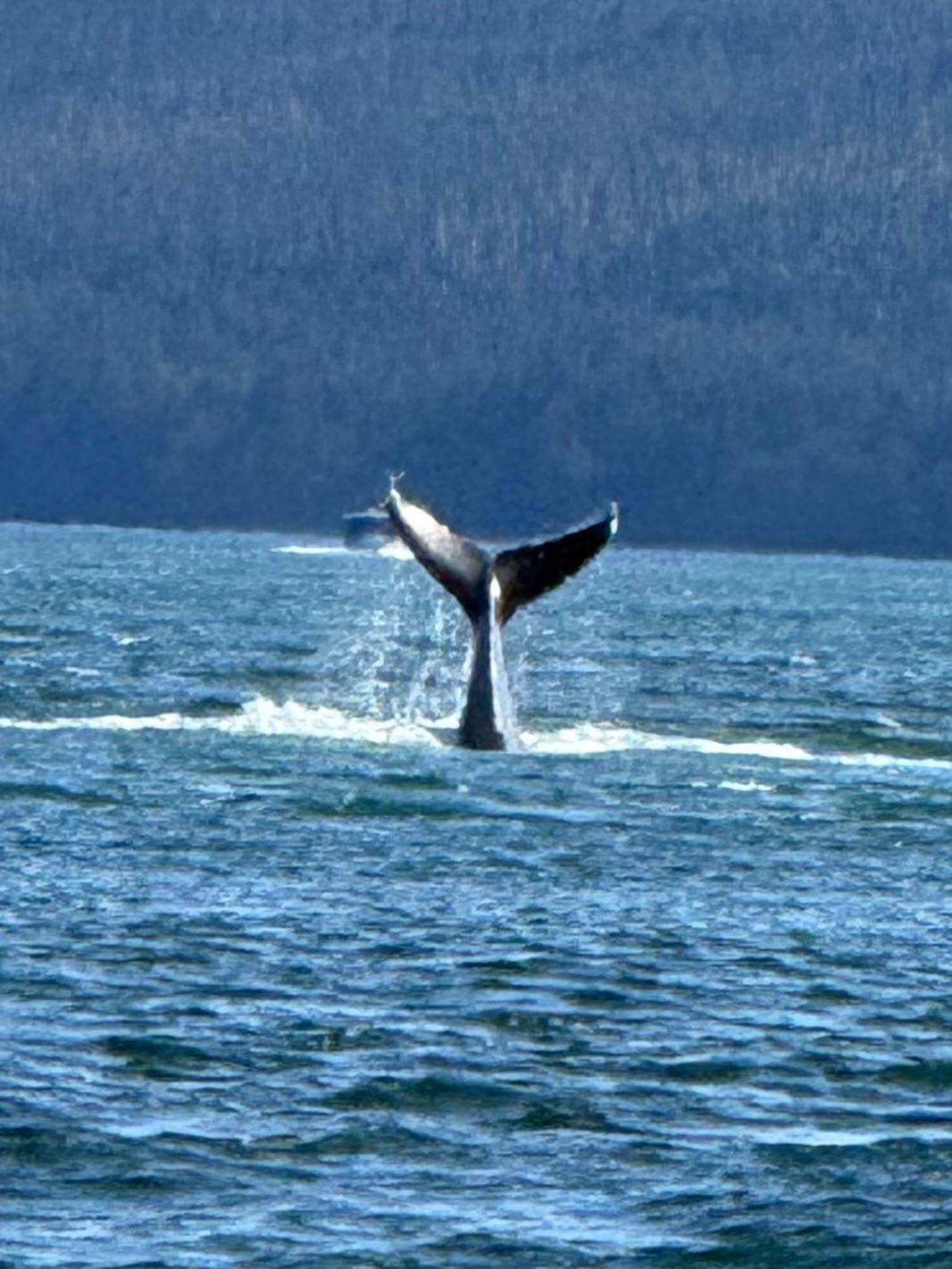 Best odds
 Wettest
The peak season is between June and August, offering the highest chances of sightings.
Summer: peak season for sightings
June, July and August form the peak of the season.2 June brings the longest days of the year, with 17.9 hours of daylight at mid-month, and an average high of 17.6 °C at Auke Bay.3 July is a touch warmer at 18.1 °C on average and still very bright, with 17.3 hours of daylight.3
Whale watching in Juneau in June suits travelers who want long light, a mild deck and the start of the busiest stretch for sightings. August stays warm, with an average high of 17.5 °C, but grows wetter, with 14 days of meaningful rain and 178 mm for the month.3
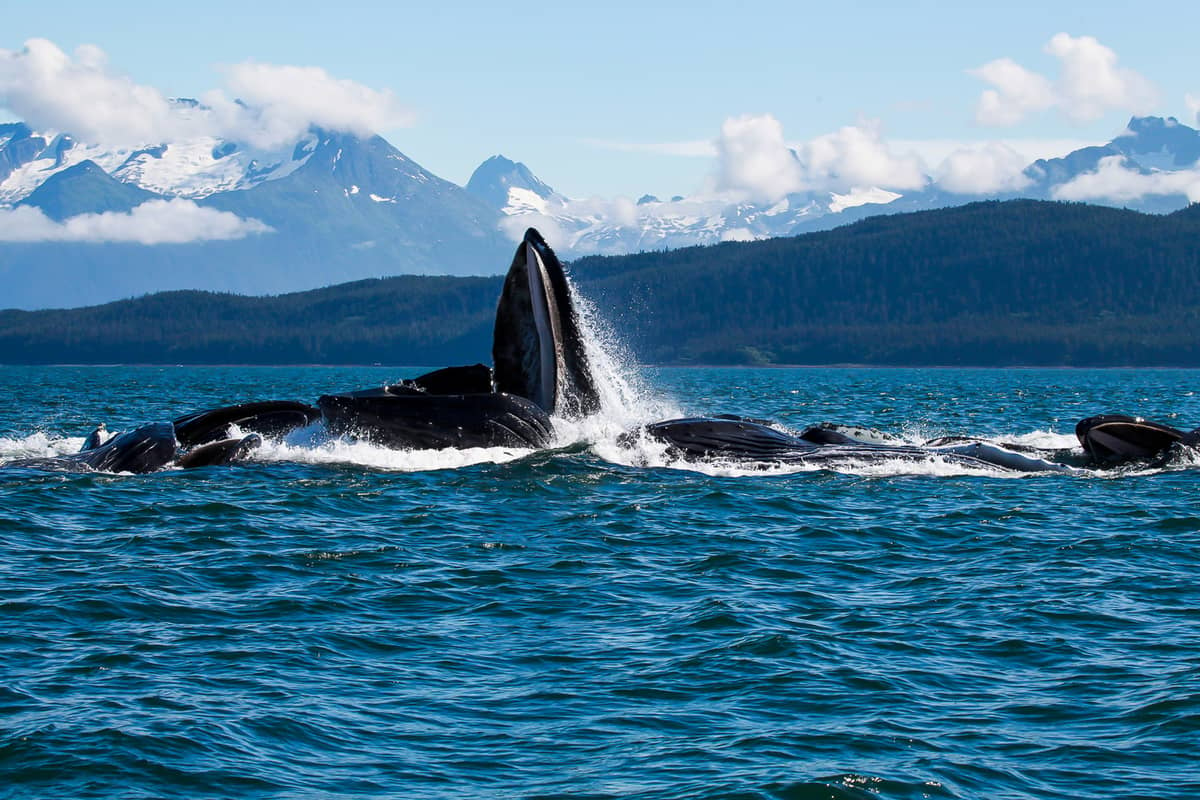
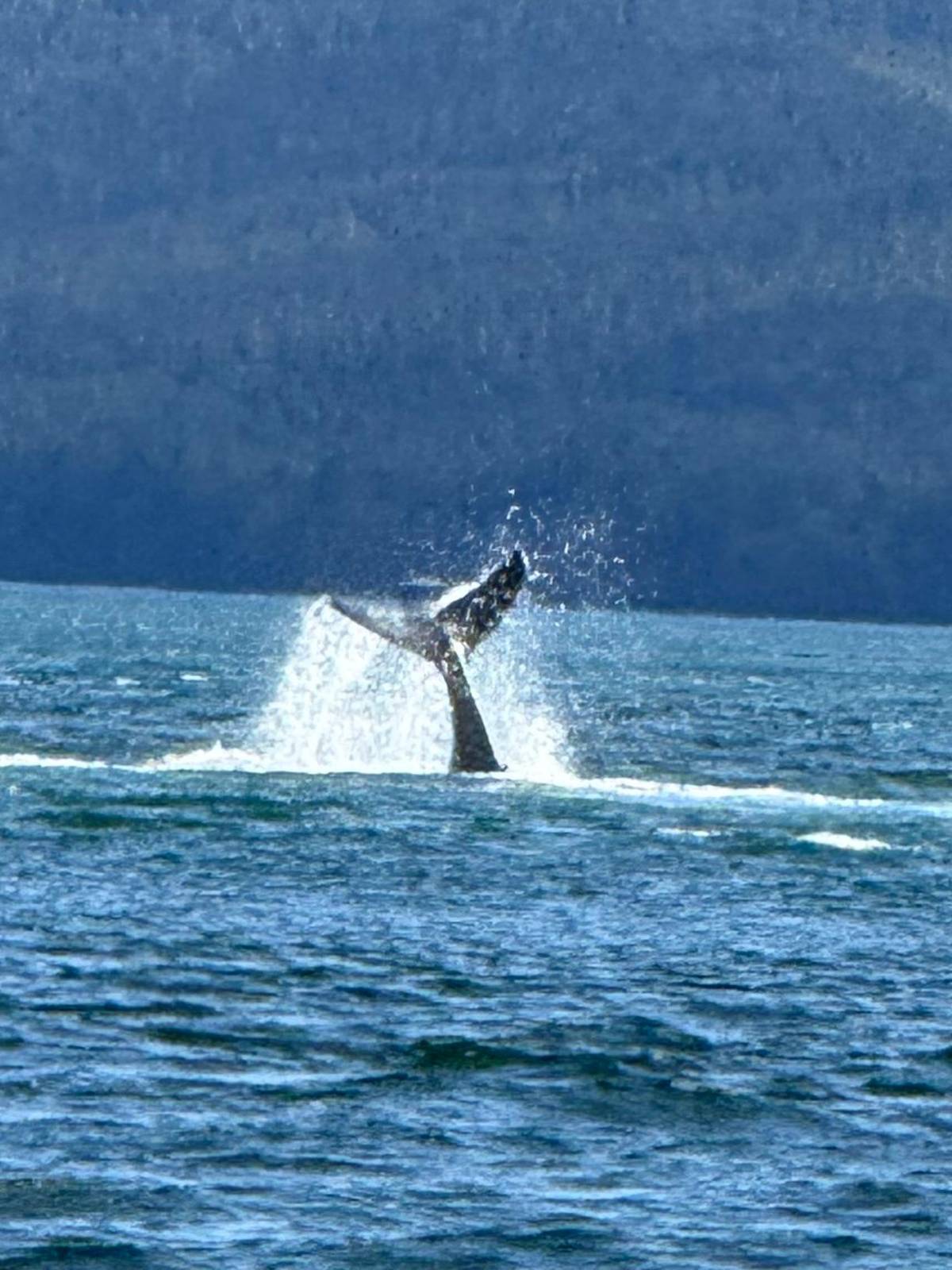
Summer is also when you are most likely to see humpbacks feeding in groups. NOAA describes a method called group coordinated bubble net feeding, in which whales use curtains of air bubbles to concentrate their prey.9 It is never guaranteed, but it is the moment many visitors hope for, and the summer feeding season is when it happens.
Checklist
Pack for the month you go
01
Every month
- Waterproof jacket
- Warm fleece or sweater
- Hat
- Camera with zoom
02
Spring and autumn extras
- Gloves
- Spare dry socks
- A flexible day in case of wind
Video
Alaska- When to see whales?
The video loads only when you tap play.
Late season: September and beyond
September closes the Juneau whale watching season on Travel Juneau's calendar.1 It is also the wettest month at Auke Bay, with 251 mm of precipitation and 17 rainy days, and daylight drops to 12.5 hours by mid-month.3 Temperatures are still reasonable, with an average high of 13.6 °C.3
For some travelers, September is a smart choice. The light turns softer and the whales are still feeding before their long journey south. The cost is weather: a rainy, windy day can make the water rougher and the deck less pleasant, and the chance of a cancelled or shortened trip rises.
October continues the slide, with 18 rainy days and 9.9 hours of daylight at mid-month.3 Whales may still be around, but tour schedules and visitor numbers fall away. If you are in Juneau late in the year, check whether departures are still running before you plan your day around one.
Morning or afternoon
The month is the big decision, but the time of day matters too. Travel Juneau notes that morning tours often have calmer water, while afternoon trips get the warmer part of the day.4 If you are prone to seasickness, the morning is the safer bet. If you want warmer air on deck and the sun higher in the sky, the afternoon is pleasant.
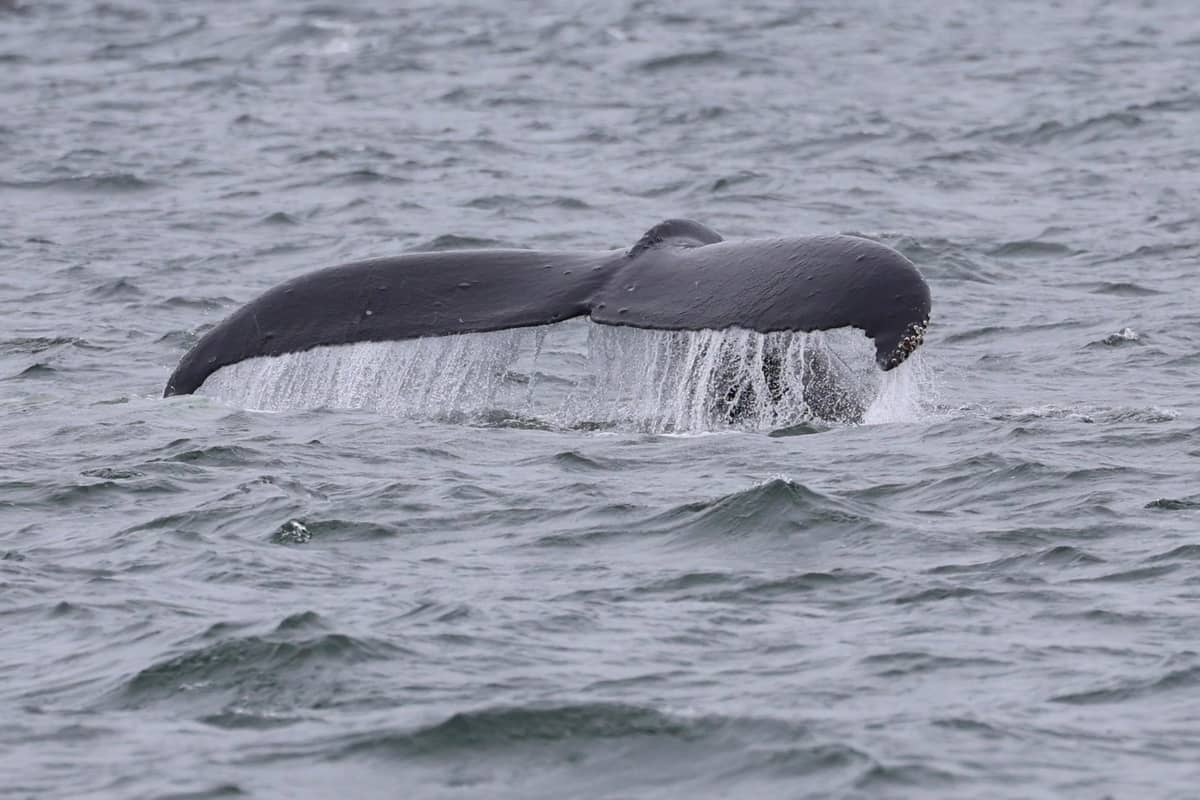
On long summer days the light is good from early morning until late evening, so there is no wrong slot for photography in June or July. Overcast skies are common in Juneau and actually make whale photos easier, because there is less glare on the water and fewer harsh shadows on the whales' dark skin. A soft, even light also helps you catch the pattern on the underside of a tail, which is how researchers and crews tell individual humpbacks apart, so a cloudy morning is no reason to stay ashore.
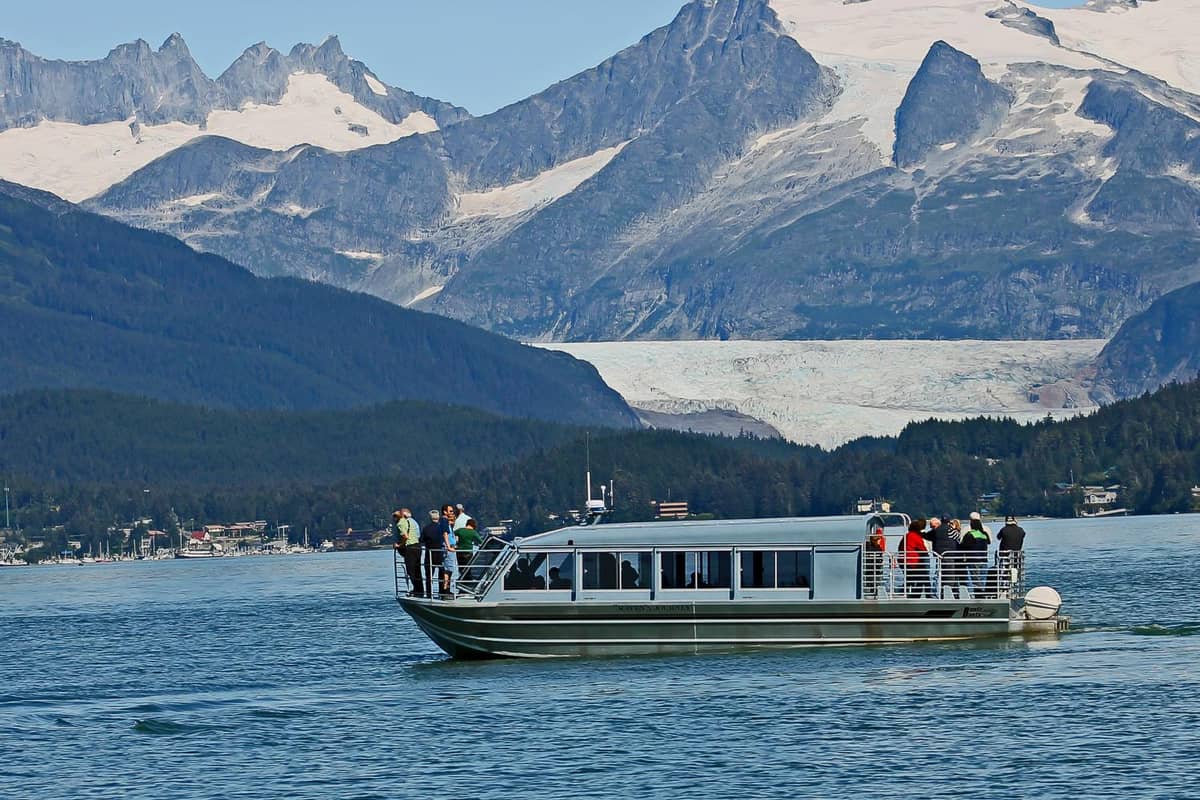
On a cruise day your port hours decide the slot for you. Book the departure that leaves the most margin before all-aboard, and keep in mind that the tour on this site takes about 3 hours from the meeting point downtown and back. That fits comfortably into most port calls.
Weather and clothing month by month
Juneau is a rainforest town, and rain is part of the experience in every month. Even in June, Auke Bay averages 10 rainy days.3 The upside is that the weather changes quickly, so a grey morning can turn into a bright afternoon. Tours run in rain; strong wind is what can cancel or shorten them.
Whatever the month, dress in layers. A waterproof jacket, a warm fleece and a hat are the basics, and gloves are welcome in spring and autumn. The listing for this site's tour asks guests to plan for rain and to expect it to be cooler on the water, which matches what the climate record shows.
Bring the same kit in high summer. The average July high is only 18.1 °C at the station, and wind over open water cools the deck further.3 You will be glad of the extra layer while you wait for a whale to surface again.
So which month should you pick?
If you can choose, go in June, July or August for the best balance of sightings, daylight and temperature.2 Of those, June offers the longest days and July the warmest air, while August is still warm but noticeably wetter.333
Go in May or September if you would rather avoid the peak months and do not mind cooler or wetter weather. You still fall inside the season Travel Juneau gives, and the whales are still feeding.1 Pack for rain and leave some flexibility in your plans in case a windy day forces a change.
Whatever the month, remember that whales are wild. No season guarantees a breach or a bubble-net feed, and every boat has quiet days. Pick the month that suits your trip, dress for the water and enjoy the scenery of the channels, which is spectacular in any weather.
Book your seat
The humpbacks are feeding off Auke Bay.
Claim a place now, settle up nearer the date, and change your mind at no charge until the day before sailing.


You ask,we answer.
What months can you see whales in Juneau?
April through September. That is the season Travel Juneau gives for whale watching.1
When is the peak?
June to August. Travel Juneau names these months as the peak, with the highest chances of sightings.2
Can you see whales in Juneau in winter?
Possibly, but tours are rare. Humpbacks can be seen in Alaska at any time of year, though most winter far south.6
Which is the wettest month?
September. Auke Bay averages 251 mm of precipitation in September.3
How long are the days in June?
Very long. Mid-June has 17.9 hours of daylight at Auke Bay.3
Is it cold on the boat in summer?
Cool, so bring layers. The average July high at Auke Bay is 18.1 °C, and it is cooler on the water.3
Morning or afternoon tour?
Morning for calm water. Travel Juneau notes calmer water in the morning and warmer afternoons.4
Sources
Evidence for this guide
- 1Travel JuneauDiscover Whale Watching in Juneau, Alaska↩
- 2Travel JuneauDiscover Whale Watching in Juneau, Alaska↩
- 3↩
- 4Travel JuneauDiscover Whale Watching in Juneau, Alaska↩
- 5Alaska Department of Fish and GameHumpback Whale Species Profile↩
- 6Alaska Department of Fish and GameHumpback Whale Species Profile↩
- 7NOAA FisheriesHumpback Whale↩
- 8NOAA Alaska Fisheries Science Center, Auke Bay LaboratoriesQuarterly research report, Oct-Dec 2009↩
- 9NOAA FisheriesHumpback Whale↩
Keep reading