 Most likely
Humpback whale
The summer feeder
- Length
- 15 m
- Look for
- Blow and tail
- Best behavior
- Bubble nets
Guides
Language
EnglishCurrency
US dollar · $On GetYourGuide you see prices in this currency.
Guide · The whales
Humpbacks feeding in the summer channels, orcas passing through, sea lions on the buoys: a field guide to wildlife and whale watching in Juneau, written for the deck rather than the lab.
Editorial team, juneauwhalewatchingtours.comUpdated October 16, 20266 minutes to read17 sources
Ask anyone what they hope to see on wildlife and whale watching in Juneau and the answer is a humpback. These are big, slow, expressive whales, and they spend the summer feeding in the channels around town. Adult females average 15 m in length and weigh around 35 tons, with males slightly smaller.3 Calves are born at 3 to 5 m and about 1.5 tons.6
Humpbacks come north to eat. They feed almost exclusively in the summer months and live off their fat reserves while they breed in warmer waters.1 A feeding whale can take in up to 1.5 tons of food a day, mainly krill and small schooling fish.7 That constant feeding is what makes the summer channels near Juneau such a reliable place to watch them.
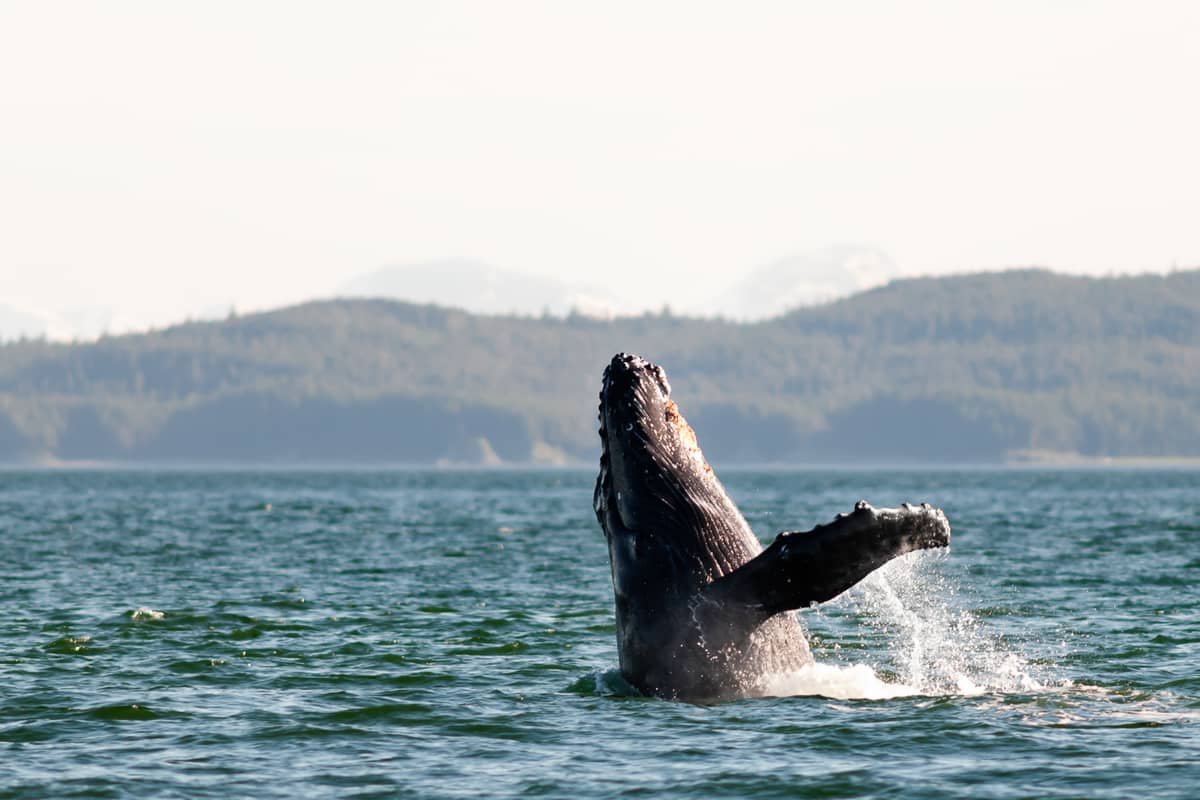
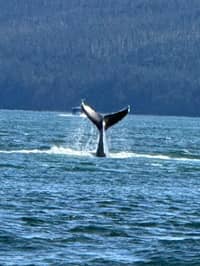
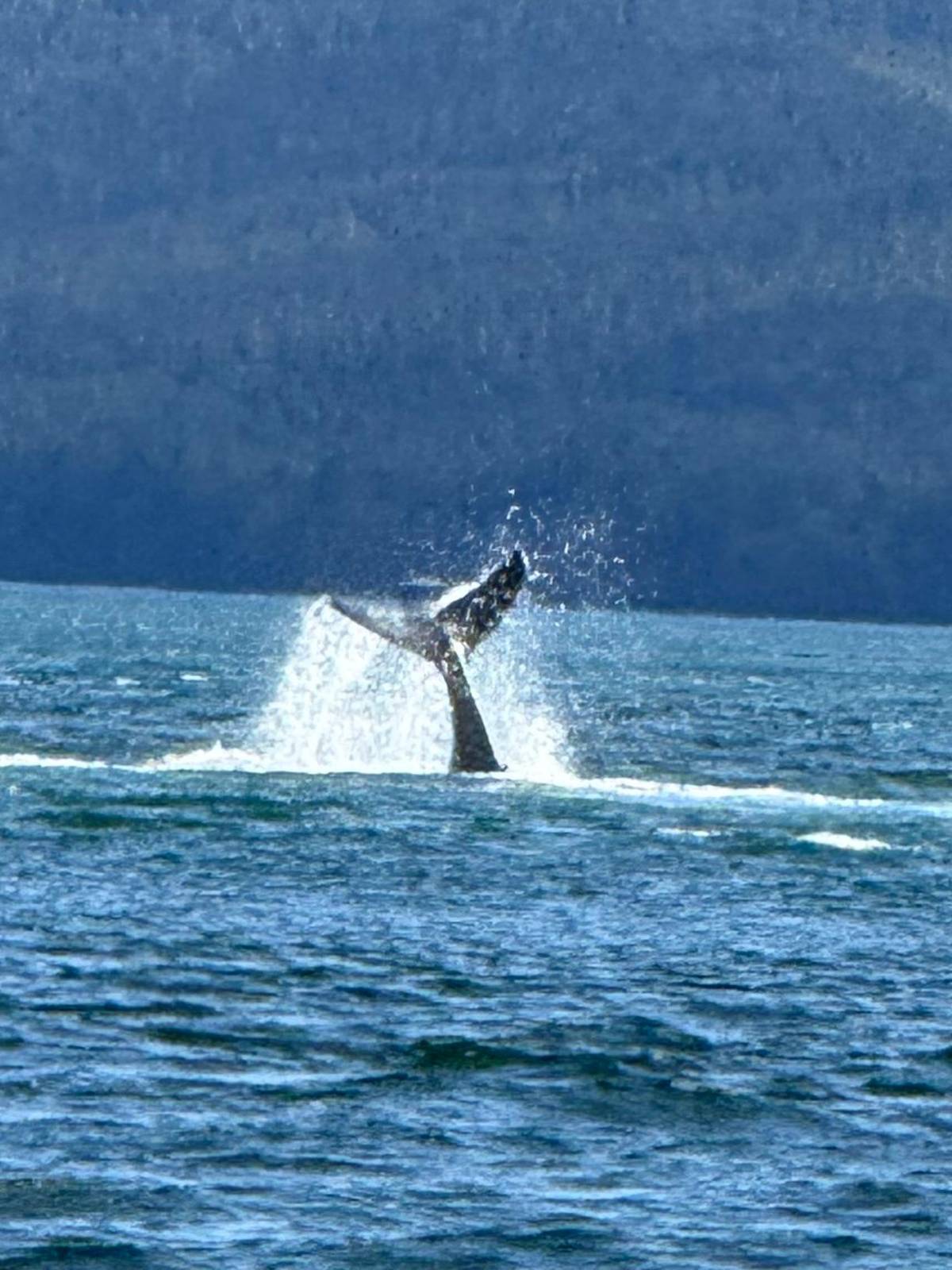
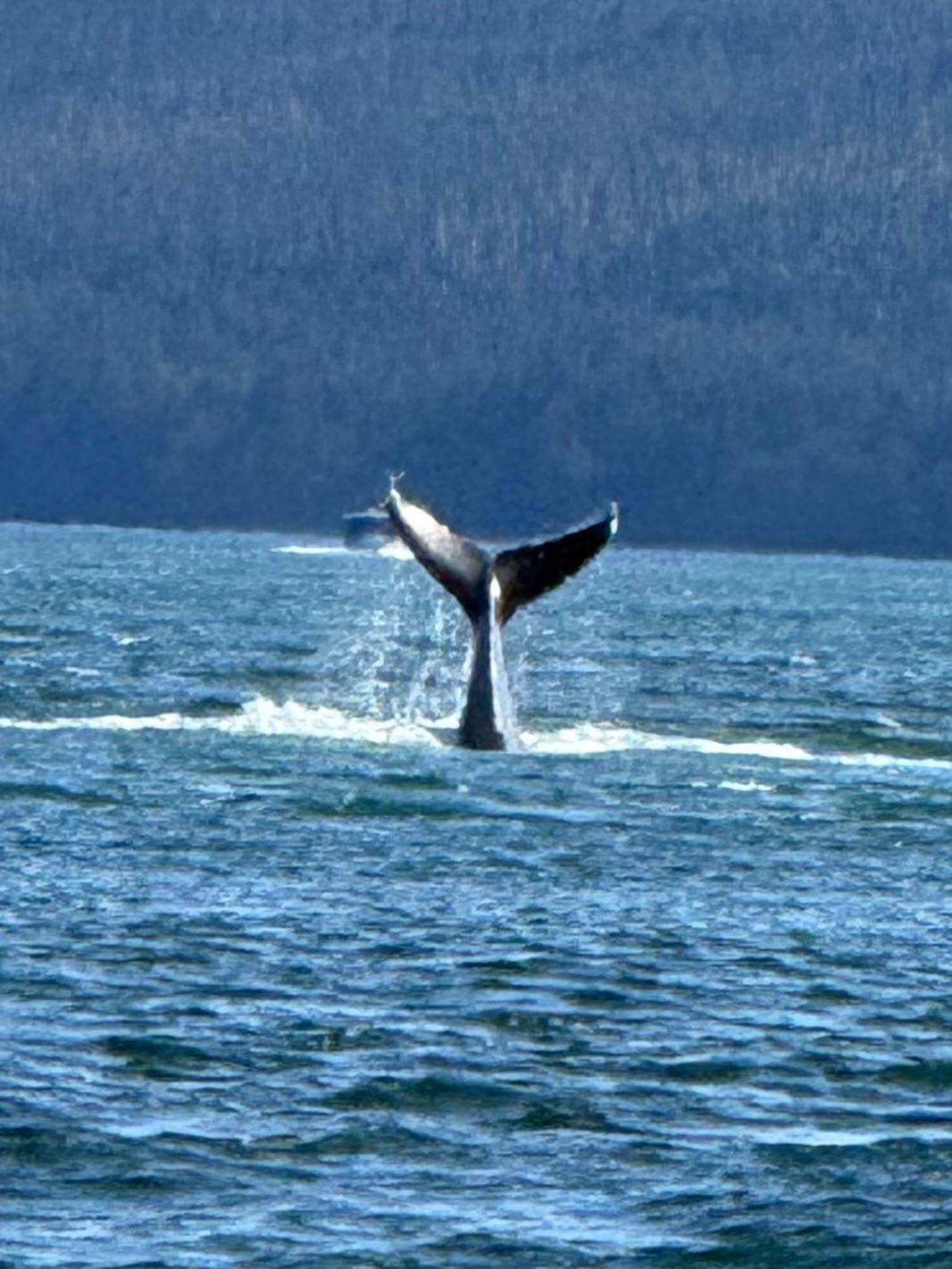
From the boat, a humpback usually shows itself in stages. First the blow, a tall puff of vapor you often hear before you see it. Then the long dark back rolls through the surface, followed by the small dorsal fin. If the whale is heading down for a deep dive, the back arches and the tail rises clear of the water, showing the pale underside that crews use to recognise individual animals.
A humpback's year
Summer
Humpbacks feed almost exclusively in the summer months.1
Each day
Up to 1.5 tons of krill and small fish per whale.7
Autumn
Some cover the Alaska to Hawaii trip in as few as 28 days.8
Winter
Most winter near Mexico, Hawaii and Japan.9
Spring
They return to feed, and the season in Juneau opens in April.10
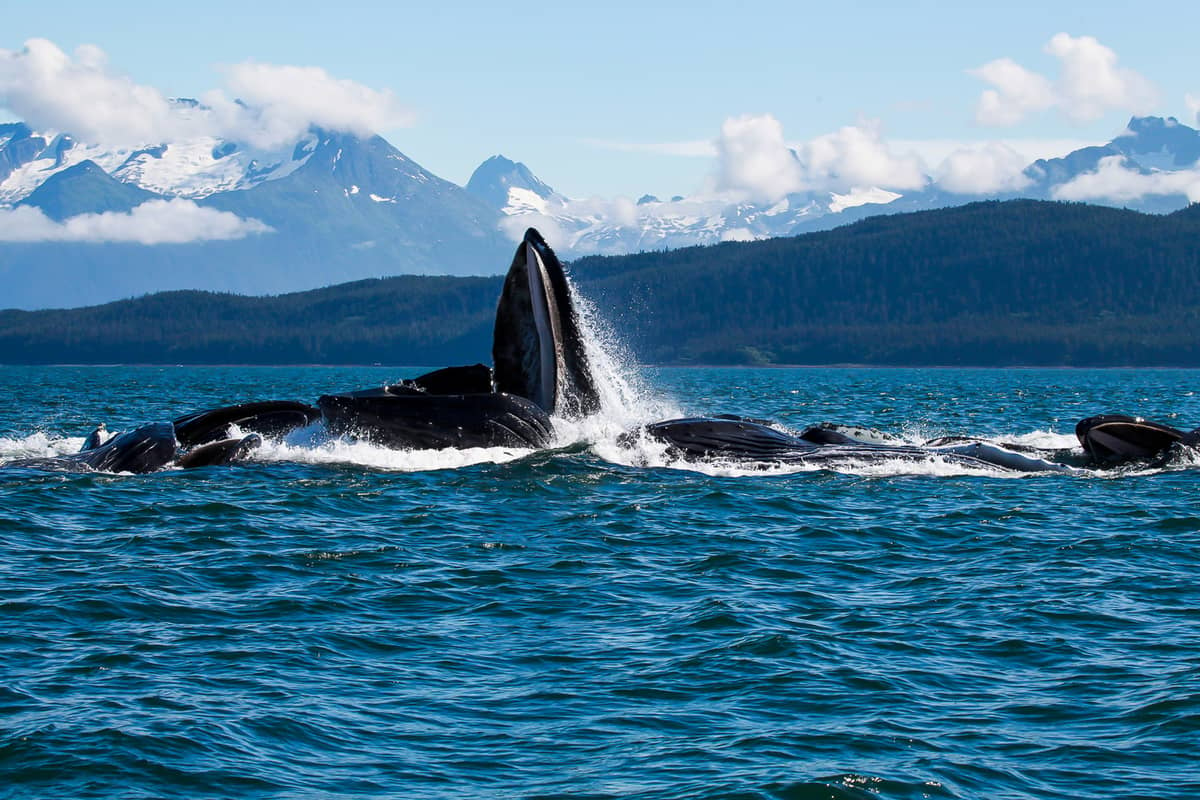
The most famous sight in these waters is bubble-net feeding. A humpback releases air bubbles while swimming in circles beneath its prey, then lunges open-mouthed to the surface through the middle of the trapped fish.4 NOAA describes a group version, called group coordinated bubble net feeding, in which whales use curtains of air bubbles to concentrate their prey.11
When it happens, you usually see a ring of bubbles appear on the surface, a few gulls circling, and then several open mouths bursting up together in a burst of white water. It lasts seconds, and there is no warning beyond the bubbles, so crews ask everyone to keep watching the spot once a ring appears. It is never guaranteed on a given trip, but it is the moment many people remember for years.
Humpbacks feed in other ways too. They may lunge alone at the surface, roll on their side or dive repeatedly in the same area. Watch the birds: gulls and other seabirds gathering low over the water often mean fish near the surface, which is exactly what a hungry humpback is looking for.
Field guide
| Animal | How to spot it | Size | Diet |
|---|---|---|---|
| Humpback whale | Tall blow, arched back, raised tail | Females avg 15 m | Krill and small fish |
| Killer whale (orca) | Tall black dorsal fin | Males up to 8.2 m | Fish or marine mammals |
| Sea lion | Piled on buoys, loud barking | - | - |
| Porpoise | Small fin and quick splash | - | - |
| Bald eagle | White head in shoreline trees | - | - |
Sizes and diets from ADF&G species profiles; other animals named as possible sightings by Travel Juneau and the tour listing.375122
Three to look for
Most likelyThe summer feeder
 A lucky bonus
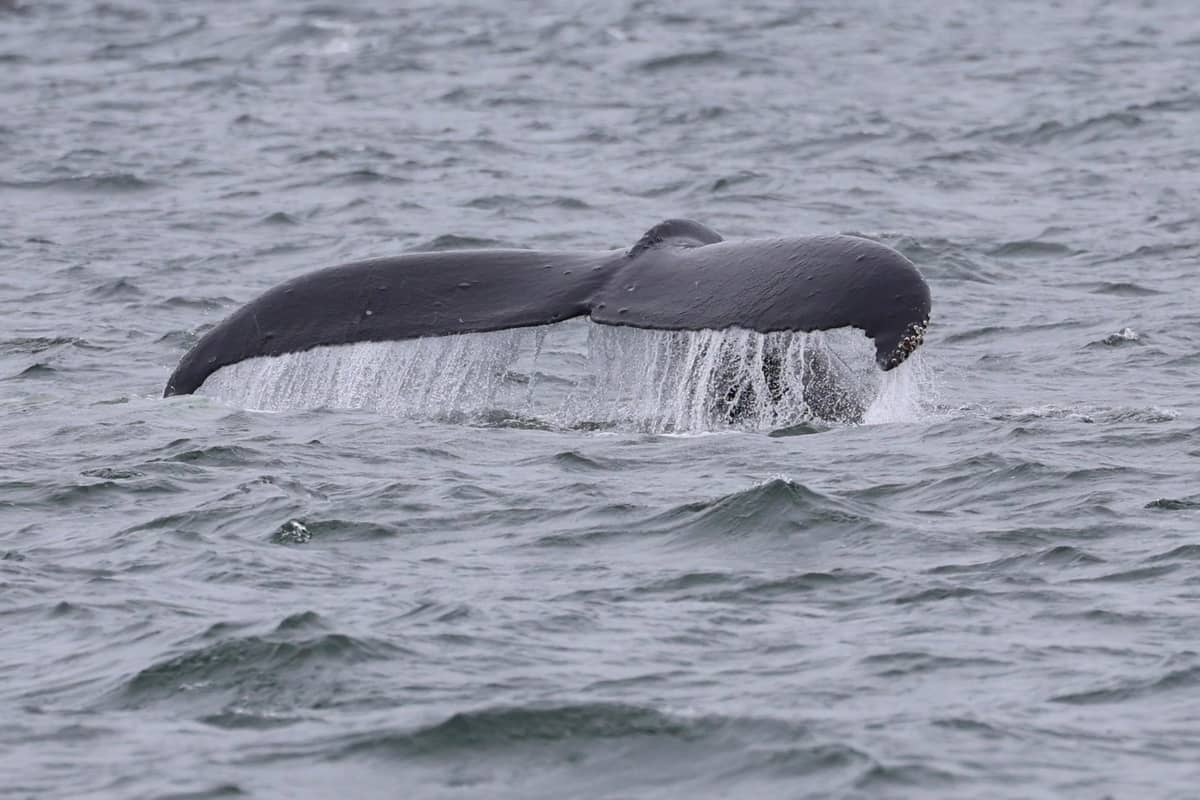 Easy photo
Resident killer whales are known to be fish-eaters, in contrast to transients that feed on marine mammals.
Orcas are less predictable than humpbacks, which is part of their appeal. Travel Juneau lists orcas among the animals visitors may also spot on a whale watch.2 When a pod appears, the tall black dorsal fins of the adult males are hard to miss, and the whole boat tends to fall quiet. Orca whale watching in Juneau is a bonus rather than a plan, and crews scan for those fins on every trip.
Alaska has two well-known kinds of killer whale with very different diets. Resident killer whales are fish-eaters, while transients feed on marine mammals.5 Your naturalist can often tell you which kind you are watching from where the group travels and what it is doing at the surface.
Orcas are smaller than humpbacks but still impressive. Adult males in the North Pacific can grow to about 8.2 m, while females average about 7 m.12 The male's dorsal fin is the giveaway, standing tall and straight above the water, while a female's fin is shorter and curved.
Checklist
Video
The video loads only when you tap play.
A whale watch near Juneau is rarely only about whales. Sea lions and porpoises are on Travel Juneau's list of likely extras.2 The listing for this site's tour adds bald eagles to the animals you may see, which fits the coastline: tall spruce on rocky shores with plenty of fish below.
Sea lions often haul out on navigation buoys in the channels, piling onto the platforms in heaps and barking at passing boats. They are a reliable photo on many trips, and the noise alone is worth the stop. Porpoises are quicker and harder to photograph, appearing as small dark fins and a splash before they are gone again.
Eagles are easiest to spot perched in tall trees along the shore or circling over the water. Your guide will point them out, and binoculars help a great deal. The tour on this site includes binoculars, which makes picking out a white head against dark forest far easier.
The whales you watch near Juneau are seasonal visitors. Humpbacks can be seen in Alaska at any time of year, but most winter in warm waters near Mexico, Hawaii and Japan.9 In the North Pacific some humpbacks migrate between Alaska and Hawaii, and they can cover the 3,000 mile journey in as few as 28 days.8
Their songs belong to that winter world. A typical humpback song lasts 10 to 20 minutes, is repeated for hours and changes slowly over the years.13 You are unlikely to hear full songs on a summer feeding trip, but if your boat carries a hydrophone, ask the crew to drop it in the water, which adds a strange and beautiful layer to the day.
Because humpbacks return to the same feeding grounds, researchers can follow individuals for years. In Glacier Bay and Icy Strait, scientists photographically identified 237 individual humpbacks, including 10 calves, in the summer of 2013.14 Each whale is identified by the black and white pattern on the underside of its tail.
All of these animals are protected, and the rules on the water reflect that. In Alaska it is unlawful to approach a humpback whale within 100 yards (91.4 m), with some exceptions.15 Boats must also move at a slow, safe speed when near humpbacks.16 Good crews wait for the whales to choose the distance rather than closing in on them.
The local whale watch community also runs a voluntary program. Whale SENSE Alaska has been in effect for the Juneau area since 2015.17 For you as a passenger, it means patience: the boat may sit still for long minutes while a whale feeds, and that quiet waiting is often when the best moments happen.
On deck, keep your voice down when the engine is off, stay out of the crew's way and keep any food or wrappers inside. Never throw anything into the water. Watching wildlife well is mostly about stillness and attention, and it rewards both.
Look for the blow first. On a calm day it rises clearly above the water and hangs in the air for a moment, and you can see it from a long way off. Once you have found a whale, keep watching that patch of water, because the next surfacing is often close to the last.
Use your binoculars for scanning and your naked eye for the moment itself. Through binoculars you will pick out distant blows, fins and birds, but when a whale surfaces near the boat you want the wide view. Many people miss a tail because they are looking through a lens at the wrong angle.
For photos, set a fast shutter speed before you reach the whales, and shoot in bursts when a back arches before a dive. Then lower the camera now and then. The memory of a humpback breathing a few boat lengths away stays with you far longer than an average photo of it.
Book your seat
Claim a place now, settle up nearer the date, and change your mind at no charge until the day before sailing.
Humpback whales. They feed in the area in summer, living off fat reserves in winter.1
Sometimes. Travel Juneau lists orcas among the animals visitors may also spot.2
Adult females average 15 m. They weigh around 35 tons; males are slightly smaller.3
A way of trapping prey. Whales circle under fish releasing bubbles, then lunge up through the middle.4
It depends on the type. Residents eat fish, transients feed on marine mammals.5
Sea lions, porpoises and eagles. Travel Juneau and this tour's listing both name them as possible sightings.2
No closer than 100 yards. That is the federal approach rule for humpbacks in Alaska, with some exceptions.15
Sources
Keep reading